IEEE / MTS OCEANS 2026 Accepted Workshop • Attendance is strictly structured around cohort-based decision matrices to ensure high-fidelity simulation outcomes

Socio-Technical Simulation Workshop: Stress-Testing Commercial Roadmaps for Evolving International URN Legislation

Map Real-World Fleet Compliance Trade-Offs Across Engineering, Operations, Policy, and Capital Allocation.

Administrative notice

Workshop venue sizing at the Monterey Conference Center is determined by early demand metrics. Expressing your interest early ensures adequate room capacity is allocated, assists with cohort role pre-assignment, and protects the session against schedule cancellation due to perceived low initial tracking.

Register for OCEANS 2026 Conference ↗

Overview

This half-day workshop brings together engineering, operations, policy, and underwriting perspectives to explore how evolving underwater radiated noise requirements may affect commercial fleet planning, compliance strategy, and asset value. Participants will work through a structured simulation designed to test decisions under regulatory, technical, and capital constraints.

Core Objective
Stress-Test Fleet Compliance Roadmaps

Evaluate commercial asset risk under evolving 2030 international URN legislation.

Format
Interactive Strategic Simulation

Hands-on, multi-role scenario modeling (no passive lectures).

Duration
3.5 Hours

Half-day structured simulation session at OCEANS 2026.

Target Audience
Engineers · Operators · Regulators · Financiers

Acoustic Physics · Fleet Operations · Port Policy · Ship Finance & Underwriting

About the Workshop

This session departs from traditional paper-based presentations to deliver an interactive strategic simulation. Participants will navigate the complex intersections of acoustic physics, naval architecture, international maritime policy, and commercial ship finance.

Instead of treating noise-quieting technologies in isolation, the workshop focuses on the complete socio-technical ecosystem governing fleet compliance. Because standardized commercial URN roadmaps do not currently exist, participants will actively construct and stress-test candidate compliance pathways—evaluating how raw Sound Pressure Level (SPL) data, hydrodynamic retrofit feasibility, capital allocation, and port-state enforcement interact under real-world operational and financial friction.

Primary Focus
Commercial URN compliance & fleet risk under 2030 regulation
Multi-Disciplinary Lens
Acoustic Physics + Fleet Strategy + Port Policy + Ship Finance
Core Deliverable
Synthesized Commercial URN Compliance Roadmap (White Paper) + Open-Access Dataset
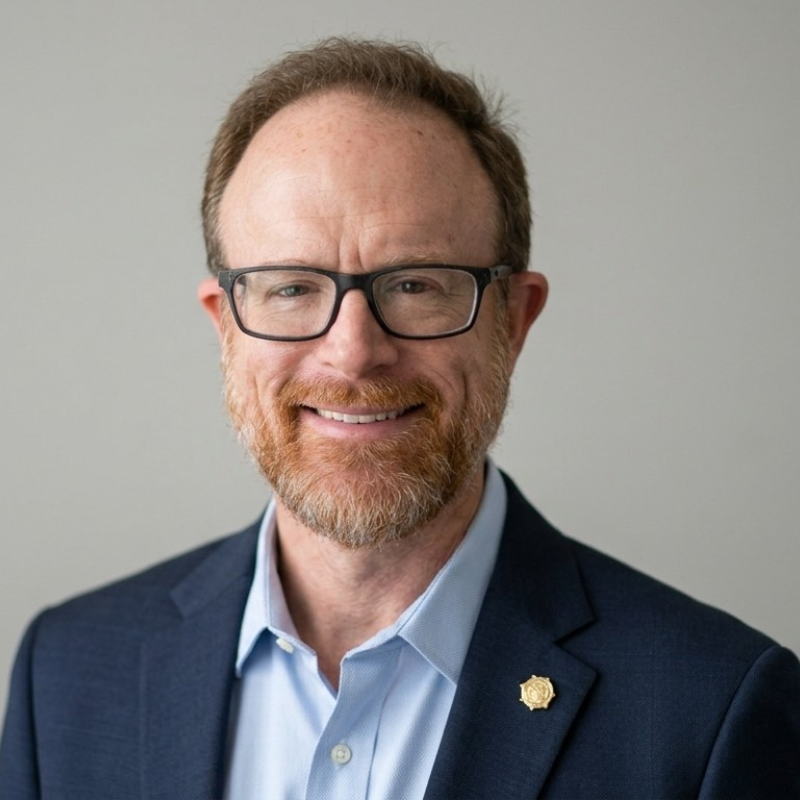
Portrait of Jean-Paul E. Dubé

Jean-Paul E. Dubé

View Bio

Lead Organizer • Captain (Ret.), US Navy

Retired US Navy Captain and doctoral candidate specializing in URN compliance and its economic impacts on global shipping. My research focuses on bridging the gap between technical acoustic requirements and the practicalities of fleet management.
Acoustic signature diagram Inspect
SEA SURFACEFlow-inducednoise fromappendagesPropeller noise andcavitationMachinery noise radiates intothe surrounding water byinducing shell plate vibrationsand through openingsFlow-induced noisefrom flow over hulland openings

High-fidelity hull & machinery sound field dynamics simulated during the workshop.

Photo Credit to Smith & Rigby (2022)

Why This Matters

Underwater Radiated Noise (URN) is rapidly transitioning from voluntary environmental stewardship into an active commercial friction point. As regional port-state mandates and quiet class notations take shape, unmanaged acoustic signatures transform from invisible physics into explicit balance-sheet liabilities. Because acoustic compliance intersects directly with vessel speed, fuel efficiency, hull design, and debt covenants, an uncoordinated response threatens to disrupt commercial maritime operations before the industry is structurally prepared to adapt.

Regulatory pressure curve
  • 2014

    First IMO URN Guidelines

    Voluntary guidance framework established.

  • 2023

    MEPC.1/Circ.906/Rev.1

    Revised international guidelines issued.

  • 2026

    Experience-Building Phase

    Reporting, data collection, and fleet baseline audits.

  • 2030

    Simulated Regional Cap

    Workshop scenario horizon & mandatory port-state enforcement.

Asset Stranding & Valuation Shocks

Cross-Sector Financial & Operational Exposure

  • Financiers: Collateral devaluation, LTV covenant triggers, and debt service coverage ratio (DSCR) shocks.
  • Fleet Executives: Forced balance-sheet write-downs, discounted charter rates, and exclusion from low-noise green corridors.
  • Naval & Acoustic Engineers: Complex retrofit economics balancing high CapEx noise quieting against premature hull scrapping.
  • Regulators: Market distortions and supply chain bottlenecks if non-compliant tonnage is abruptly restricted from major ports.

Acoustic valuation exposure risk

Technical Inertia & Design Lock-In

20–25 Year Hull Horizons vs. Accelerated Regulation

  • Naval & Acoustic Engineers: Long design-to-delivery cycles force hulls built today to anticipate 2030+ noise ceilings without finalized global standards.
  • Fleet Executives: Shipyard drydock bottlenecks, long lead times for quiet propeller retrofits, and off-hire revenue losses.
  • Financiers: Marine mortgages outliving regulatory baselines, breaking traditional residual value models.
  • Regulators: Policy implementation pacing outstripping the physical capacity of global shipyards and acoustic test facilities.

20–25 year commercial hull horizon

Regulatory Stacking & Bandwidth Friction

Competing Environmental Mandates & Technical Trade-Offs

  • Fleet Executives: Managing URN alongside CII/EEXI, EU ETS, ballast water, and biofouling mandates under tight operating margins.
  • Naval & Acoustic Engineers: Direct engineering conflicts where certain decarbonization retrofits (e.g., energy-saving ducts) unintentionally increase acoustic cavitation.
  • Regulators: Policy collisions within international regulatory bodies between decarbonization goals and quiet shipping guidelines.
  • Financiers: ESG underwriting ambiguity when financing vessels that meet carbon intensity rules but breach URN noise thresholds.

Compounding compliance workload

Enforcement & Verification Paradox

Port-State Control, Measurement Physics & Legal Exposure

  • Regulators: Technical friction in deploying calibrated hydrophone arrays, isolating ambient port noise, and establishing enforceable legal standards.
  • Naval & Acoustic Engineers: Physics of verification—translating 1/3 octave band spectra into repeatable port-audit protocols.
  • Fleet Executives: Operational vulnerability to false-positive non-compliance, port delays, and charter party off-hire disputes.
  • Financiers: Indemnity and credit risk associated with financing assets subject to contentious acoustic verification data.

Verifiable acoustic auditing gap

Economic Levers Stress-Tested in the Simulation

The workshop evaluates URN compliance beyond technical retrofits, forcing participants to make decisions across key corporate finance and balance sheet constraints.

CapEx vs. OpEx Trade-Offs

Capital Allocation & Operational Friction

Model the financial impact of upfront quiet-technology retrofits and drydock off-hire costs against the ongoing operational penalties of forced speed reductions and fuel-curve inefficiencies.

Charter Valuation & Revenue Risk

Fixture Discounts & Corridor Access

Evaluate charter party exposure, analyzing how failure to secure quiet class notations impacts fixture durations, freight rate premiums/discounts, and access to regional green shipping corridors.

Credit Risk & Asset Stranding

DSCR Shocks & Financing Covenants

Stress-test debt-service coverage ratios (DSCR), loan-to-value (LTV) covenants, and accelerated hull depreciation models under impending 2030 port-state decibel caps.

Strategic Intelligence Briefings

Executive briefings wargaming URN compliance across the four simulation stakeholder domains.

Regulatory & Policy Analysts4-min read

The Regulatory Trap: Why Voluntary IMO URN Guidelines Follow the Sulphur Cap Trajectory

Examines how unilateral regional preemption and port-state control mechanisms (e.g., EU MSFD, Vancouver ECHO) will transform voluntary MEPC.1/Circ.906/Rev.1 guidelines into binding decibel ceilings long before global codification.

Naval Architects & Engineers4-min read

Beyond Hydrodynamics: Why Physics-Only Models Fail in Real-World Silent Corridors

Analyzes why CFD and hydroacoustic trial baselines collapse in operational corridors where decarbonization mandates (CII/EEXI), off-design speed profiles, and energy-saving devices trigger unexpected cavitation and URN trade-offs.

Asset Valuation & Underwriting4-min read

Asset Devaluation & Green Financing: The Acoustic Risk Premium in Commercial Tonnage

Quantifies subsea acoustic risk within maritime debt covenants, demonstrating how non-compliant tonnage faces LTV ratio spikes, DSCR compression, and collateral devaluation under Poseidon Principles risk auditing.

Commercial Fleet Operations5-min read

The Operational Battlefield: Charter Party Warranties, Speed Caps, and Fleet Deployment in Silent Corridors

Details the contractual clash between BIMCO speed and consumption warranties, laycan windows, 21-day drydock off-hire windows, and mandatory port-state vessel speed reductions (VSR).

Workshop Objectives

The session is designed to achieve four core outcomes across academic research, regulatory policy, and commercial fleet management.

Model Socio-Technical System Dynamics

Simulate how evolving regional and international URN legislation impacts maritime decision-making across disparate stakeholder domains under real-world operational and financial constraints.

Bridge Cross-Sector Information Asymmetries

Uncover and resolve critical knowledge gaps between Maritime Regulators, Commercial Fleet Executives, Acoustic & Naval Engineers, and Maritime Financiers.

Synthesize a Commercial URN Compliance Roadmap

Translate real-time simulation trade-offs, CapEx/OpEx friction, and acoustic physics into a published white paper detailing a novel, actionable framework for commercial fleet compliance.

Generate Open-Access Research Data

Capture anonymized decision matrices and risk vectors generated during the simulation to build a unique, open-access dataset for socio-technical maritime policy and economics research.

Primary Workshop Deliverables

The simulation is structured to produce two durable, peer-reviewed research and industry assets.

Synthesized Commercial URN Compliance Roadmap Framework

Peer-Reviewed White Paper & Executive Policy Brief

A formal white paper synthesizing simulation outcomes into an actionable compliance roadmap framework. Utilizing the workshop's URN Risk Exposure Matrix (mapping Compliance Capital Required against Asset-Stranding Risk across hull age and class notations), the roadmap outlines realistic technical retrofit timelines, CapEx/OpEx trade-off thresholds, and regulatory harmonization pathways.

Exposure matrix
Modern Quiet Hulls
Early Retrofit Programs
Deferred Compliance Tonnage
Aging Non-Compliant Fleets
Compliance capital required →Asset-stranding risk →

Citation preview — available post-workshop

Anonymized Open-Access Socio-Technical Dataset

Open-Access Dataset (IEEE DataPort / Zenodo • DOI Assigned)

A structured, machine-readable dataset (.csv / .json) capturing empirical human-in-the-loop decision vectors generated during the simulation for future academic, policy, and economic research.

  • Socio-Technical Decision Matrices: Anonymized cohort trade-off selections balancing dB noise targets against CapEx limits, drydock availability, and speed penalties.
  • Cross-Role Utility & Weighting Scores: Normalized risk-acceptance vectors capturing alignment and friction points between Regulators, COOs, Engineers, and Underwriters.
  • Negotiation Delta Logs: Quantitative tracking of initial cohort positions versus final cross-sector compromise agreements.

Download & DOI citation — available post-workshop

Deliverable & Research Publication Roadmap

  1. September 2026

    Data Collection & Synthesis

    Execution of the 3.5-hour simulation at OCEANS 2026 Monterey; capture and anonymization of multi-role socio-technical decision matrices.

  2. Q4 2026 (November)

    Open-Access Dataset Release

    Publication of machine-readable (.csv/.json) cohort trade-off matrices to IEEE DataPort and Zenodo with assigned DOI for academic citation.

  3. Q1 2027 (January)

    White Paper & Executive Policy Brief

    Formal publication and distribution of the synthesized Commercial URN Compliance Roadmap Framework to participating delegates, port authorities, and industry bodies.

The Format

3.5-Hour Interactive Strategic Simulation

This is a 3.5-hour, half-day interactive strategic simulation—not a passive lecture. Participants are assigned specific executive role dossiers and organized into multidisciplinary cohorts comprising Maritime Regulators, Commercial Fleet Executives, Acoustic & Naval Engineers, and Maritime Financiers.

Operating under a simulated 2030 regional URN decibel cap scenario, cohorts must navigate real-time regulatory injections, balance hard acoustic physics against CapEx/OpEx constraints, and negotiate cross-sector compliance terms. Decisions are captured via standardized socio-technical matrices to generate empirical trade-off data and synthesize an actionable Commercial URN Compliance Roadmap Framework.

Explore 4 Simulation Roles ↓

Simulation Roles

Every participant is assigned one of four role dossiers before the session.

Sovereign Legal Authority & Enforcement

Maritime Regulator & Port-State Control

Sovereign Policy, IMO Legislation & Port Enforcement

Sets, monitors, and enforces regional and port-state noise ceilings under evolving IMO MEPC.1/Circ.906/Rev.1 guidance. Manages political trade-offs, port entry restrictions, legal jurisdiction, and supply chain continuity.

Shipowner / Charterer

Commercial Fleet Executive & Operator

Fleet Asset Management, CapEx/OpEx & Charters

Manages vessel lifecycles, charter party commitments, and fleet capital allocation. Balances quiet-technology retrofits against drydock availability, off-hire revenue losses, and fuel-curve penalties under speed reductions.

Engineering, Acoustics & Third-Party Verification

Naval Architect, Acoustic Physicist & Class Surveyor

Hydrodynamics, Acoustic Measurement & Class Notations

Analyzes raw Sound Pressure Level (SPL) data, 1/3 octave band spectra, and ISO 17208 sea trials. Evaluates wake-field optimization, propeller cavitation, and machinery isolation while monitoring and certifying compliance under Classification Society quiet class notations.

Banking / Underwriting

Maritime Financier & Asset Underwriter

Ship Finance, Credit Risk, DSCR & Insurance

Assesses commercial credit risk, Debt-Service Coverage Ratios (DSCR), Loan-to-Value (LTV) covenants, and hull insurance exposure. Prices capital availability and stress-tests asset-stranding risks under mandatory regional noise ceilings.

Negotiation topology
DecisionmatrixMaritime RegulatorFleet ExecutiveAcoustic, Naval & ClassMaritime Financier

Detailed Agenda

3.5-Hour (210-Minute) Interactive Simulation Schedule (Click any row for phase specifics)

Total Duration: 210 Minutes
  • 00:00 - 00:10 | Workshop Overview & Simulation Rules (Lead Simulation Architect)
  • 00:10 - 00:20 | Regulatory & Port-State Control Baseline (Regulator Co-Facilitator)
  • 00:20 - 00:30 | Fleet Operations & Charter Constraints (Fleet Executive Co-Facilitator)
  • 00:30 - 00:40 | Acoustic Physics & Hydrodynamic Feasibility (Acoustic Engineer Co-Facilitator)
  • 00:40 - 00:50 | Ship Finance, Credit Risk & Underwriting Exposure (Financier Co-Facilitator)

Simulated announcement of mandatory 2030 regional port-state noise ceilings under MEPC.1/Circ.906/Rev.1. Multidisciplinary role cohorts break out to evaluate initial baseline noise audits, articulate immediate domain concerns, and formulate initial sector response strategies under scenario constraints.

Simulates sudden market friction as regional noise caps take effect. Violent disruption begins at the banking and underwriting layer—triggering DSCR covenant breaches, loan-to-value (LTV) revaluations, and insurance coverage constraints. Cohorts must respond to secondary operational shocks, drydock bottlenecks, and fuel-curve penalties.

Cross-cohort negotiations between Fleet Executives, Regulators, Naval/Acoustic Engineers, and Maritime Financiers. Cohorts negotiate green corridor exemptions, charter party cost-sharing, and CapEx quiet-technology financing terms to test whether socio-technical friction points can be reconciled into actionable roadmaps.

Plenary debrief of simulation outcomes. Capture and aggregation of anonymized decision matrices, trade-off preference vectors, and risk profiles. Session concludes with structured delegate onboarding for the post-conference white paper framework and IEEE open-access dataset.

Who Should Attend?

Multi-disciplinary cross-sector participation ensures high-fidelity simulation dynamics across acoustic physics, fleet management, policy, and ship finance.

Naval Architects, Acoustic Physicists & Class Society Surveyors

Acoustic Physics, Hydrodynamics & Class Verification
  • What You Bring: Hydrophone array data analysis, 1/3 octave band spectra interpretation, wake-field optimization, cavitation inception speeds, ESD retrofit feasibility, and Classification Society survey experience with ISO 17208 protocols and quiet class notations.
  • What You Gain: Stress-test how technical acoustic solutions and class notation verification hold up against CapEx constraints, drydock off-hire windows, and commercial underwriting risk.
Select for Interest

Commercial Fleet Executives & Technical Directors

Fleet Asset Strategy & Operations
  • What You Bring: Operational constraints, drydock schedules, speed-power curve trade-offs, fuel-burn penalties, and charter party fixture negotiations.
  • What You Gain: Foresight into 2030 regulatory risk, quiet notation charter premiums, and actionable frameworks to prevent vessel asset stranding.
Select for Interest

Maritime Regulators & Policy Analysts

Port-State Control & Policy
  • What You Bring: Regulatory enforcement frameworks, regional port-state decibel cap mechanics, and compliance verification protocols under MEPC.1/Circ.906/Rev.1.
  • What You Gain: Empirical data on real-world industry execution bottlenecks to inform enforceable policy design and avoid supply chain gridlock.
Select for Interest

Ship Financiers & Marine Asset Underwriters

Ship Finance & Credit Risk
  • What You Bring: Credit risk modeling, Debt-Service Coverage Ratio (DSCR) shocks, Loan-to-Value (LTV) covenant triggers, and marine insurance exposure.
  • What You Gain: Frameworks to quantify asset-stranding exposure, evaluate collateral devaluation, and structure quiet shipping debt terms.
Select for Interest

Observers & Strategic Analysts

Process & Roadmap Tracking

Professionals, researchers, and industry stakeholders who do not hold a direct operational role in policy, finance, engineering, or fleet operations, but want to understand how cross-domain trade-offs occur in real time and observe how the commercial URN compliance roadmap takes shape.

  • Observe live cross-table negotiations and decision dynamics
  • Review pre-scenario briefing dossiers and simulation inputs
  • Track the synthesis of the open-access compliance dataset
Select for Interest

Confirmed & Guest Speakers

Facilitators and panel leaders for the socio-technical simulation sessions.

Portrait of Jean-Paul E. DubéConfirmed

Jean-Paul E. Dubé

Lead Simulation Architect | Captain (Ret.), US Navy

University of Tampa • urnsimulation.com

Doctoral Candidate specializing in URN compliance and maritime economic risk modeling.

Additional guest facilitators and industry panellists from classification societies and fleet operators will be announced as confirmed.

Workshop Resources & Research Portal

Access pre-scenario baselines, multi-domain reference literature, executive bibliographies, and simulation matrix schemas.

Scenario Baseline • Public Access

2030 Pre-Scenario Briefing Dossier

Outlines initial simulation parameters, including the 2030 regional port-state decibel cap (130 dB threshold), baseline vessel hull profiles (container, tanker, bulk), and market economic indicators.

Categorized Literature • Interactive Hub

Multi-Domain Reference Library

Curated technical, financial, operational, and policy literature categorized across all four workshop domain pillars:

  • Regulatory: IMO MEPC.1/Circ.906/Rev.1, Paris MOU PSC protocols, EU MSFD.
  • Ship Finance: Poseidon Principles, DSCR debt covenant models, BIMCO clauses.
  • Acoustic Physics: ISO 17208 standards, DNV SILENT notation rules, ITTC standards.
  • Fleet Operations: Speed-power curves, ESD retrofit economics, CII/URN overlap.

Merged Brief & Citations • Public Download

Pre-Reading Brief & Bibliography

A synthesized 3.5-page document combining the workshop research methodology, socio-technical framework abstract, and foundational reading list for session delegates.

Role Dossiers • Balanced 4-Pillar Schema

Simulation Dossier & Matrix Schema

A preview of the standardized socio-technical decision matrices, multi-attribute trade-off rubrics, and executive role dossier templates used by all four domain cohorts during simulation breakout phases.

  • Balanced 4-Cohort Role Dossiers: tailored brief templates for Regulators, Fleet Executives, Acoustic Engineers/Class Surveyors, and Financiers.
  • Socio-Technical Trade-Off Matrix: quantitative schema mapping noise reduction (ΔdB) against CapEx/OpEx, speed penalties, and DSCR credit risks.
  • Multi-Attribute Utility Weighting: cross-cohort preference scoring rubrics capturing risk acceptance and enforcement flexibility.
  • Negotiation Delta Logs: structured tracking templates logging initial cohort positions versus final cross-sector compromise states.

Express Interest & Pre-Registration

Reserve your place in the OCEANS 2026 simulation cohort or apply to join as a domain co-facilitator.

Workshop participants collaborating around laptops during a simulation session

Human-in-the-loop simulation platform

Engineers, fleet directors, and regulators engaging in real-time URN trade-off negotiations.

Attendance is strictly structured around cohort-based decision matrices to ensure high-fidelity simulation outcomes. Early expression of interest ensures placement in your primary sector role dossier.

No immediate conference payment required. Expressions of interest are used strictly for venue allocation and role dossier pre-assignment.

Frequently Asked Questions

Key details regarding session format, pre-registration logistics, data privacy, and participant deliverables.

This is a 3.5-hour (210-minute) interactive strategic simulation, not a passive panel or lecture series. Participants are assigned executive role dossiers and organized into multidisciplinary cohorts comprising Maritime Regulators, Commercial Fleet Executives, Acoustic Engineers/Class Surveyors, and Maritime Financiers to negotiate commercial compliance under a simulated 2030 regional URN decibel cap.

There is no fixed attendance ceiling; however, final room size and hall allocation at the Monterey Conference Center are assigned by conference organizers based on early expression-of-interest metrics. Submitting your pre-registration interest early ensures adequate venue space is secured and protects the session against schedule cancellation.

No. While acoustic physics and hydrodynamic constraints anchor the simulation, participants operate across four distinct domain roles: Policy/Enforcement, Fleet Operations, Engineering/Class Survey, and Ship Finance. Role dossiers provide all necessary baseline technical parameters so cohorts can focus on strategic, operational, and financial decision-making.

No. The simulation utilizes standardized, synthetic vessel class profiles (e.g., 8,000 TEU container hulls, 115k DWT Aframax tankers) and benchmarked financial models. All participant decisions, risk scores, and trade-off matrices captured during the session are completely anonymized and aggregated for research modeling.

All registered participants receive early access to the synthesized Commercial URN Compliance Roadmap Framework white paper prior to public distribution, as well as citation access to the anonymized, machine-readable socio-technical dataset hosted on IEEE DataPort/Zenodo.

We are actively recruiting co-facilitators across our four domain pillars (Regulator, Fleet COO, Acoustic/Class Specialist, Ship Financier). To apply, select ‘Applying to serve as a domain co-facilitator’ on the Pre-Registration / Interest Form at the bottom of this page.

This accepted half-day workshop complements the technical tracks at IEEE/MTS OCEANS 2026 Monterey by bridging hard ocean engineering and acoustic science with maritime policy, fleet economics, and ship finance.

Portrait of Jean-Paul E. Dubé

Organizer & Contact

Session Chair — Student, Sykes College of Business, University of Tampa

Through urnsimulation.com, Jean-Paul E. Dube integrates socio-technical simulation modeling, agency theory, and institutional economics to advance empirical research on commercial Underwater Radiated Noise (URN) dynamics and environmental compliance mechanisms. A retired U.S. Navy Captain with 28 years of leadership across nuclear submarine warfare and naval intelligence, he examines the institutional structures governing maritime acoustic emissions and ESG capital allocation.

For speaker proposals, technical contributions, media requests, or questions about the simulation, contact the organizer directly.

Email the organizer